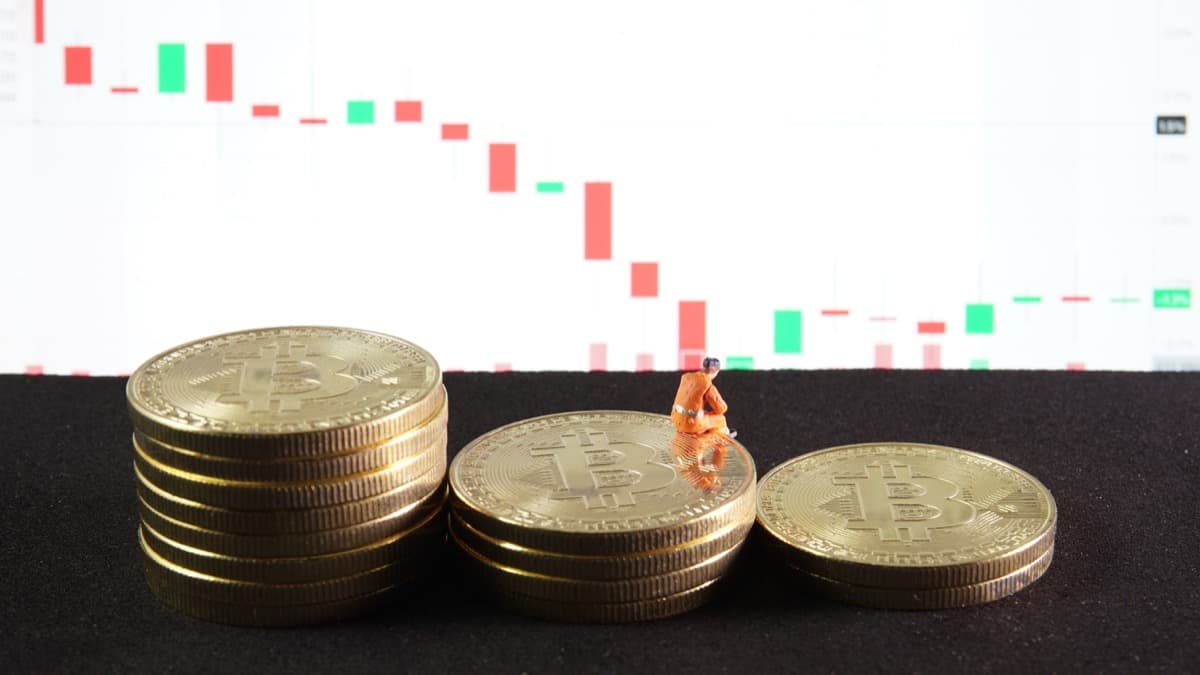
There's a market signal so obvious it's almost embarrassing: if you bought a token at its fundraising round price six months ago, you'd probably take a 50-90% haircut to exit today. That's not a normal correction. That's the market saying something fundamental is broken.
Secondary markets for early-stage crypto tokens have historically carried discounts — venture investors need exit optionality, token lockups create selling pressure, and retail buyers rightfully demand a risk premium. But the magnitude of current discounts tells a different story. We're not talking about the usual 15-30% friction. We're talking about tokens that raised at valuations that now look like they were priced by people who'd never seen a balance sheet.
The widening gap between primary and secondary pricing exposes a structural problem in how crypto capital allocation works. Venture firms, token funds, and project teams are raising money at prices that assume adoption curves that don't materialize. Then they hit the market and collide with reality: holders who got in at fundraising prices desperately want out, and retail buyers aren't willing to buy at anything close to those entry points.
This isn't new in venture capital. But crypto accelerates the feedback loop. In traditional VC, you might wait 5-7 years before you know your Series A entry was optimistic. In crypto, you get that answer in months.
The Mechanics of a One-Way Door
Here's what's actually happening: tokens raised in 2023 and early 2024 at peak exuberance are hitting liquid secondary markets just as new capital dries up and existing holders face vesting cliffs. The rational move for a token fund that bought at a $500 million valuation is to dump as soon as there's any liquidity — because waiting for the project to somehow execute its way to that valuation feels increasingly like fantasy.
The supply is real. Vesting schedules create predictable selling pressure. Team tokens unlock. Foundation allocations need to deploy. Early investors who frontran rounds now need liquidity for their next fund or their own net worth. That supply hits Uniswap, Binance, or whatever secondary market exists for these tokens, and there's no corresponding demand at the raised price.
Why should there be? A token that raised at $2 with no users, no revenue, and a whitepaper shouldn't trade at $2. It should trade lower. The only question is how much lower.
The surprising part isn't that secondaries trade at discounts. It's that primary-market investors seem genuinely surprised by this. You can't raise $50 million for a token with no product, watch six months pass with minimal adoption, and then act shocked that nobody wants to buy at your fundraising price.
What This Reveals About Capital Allocation
The 90% discount problem is actually a window into something more important: the criteria for getting crypto funded have almost nothing to do with the criteria that determine whether a token is worth holding. A project can check every box that VCs use to justify allocation — founder pedigree, market size narrative, first-mover positioning, strategic investors — and still launch a token that nobody wants at the fundraising valuation.
This suggests that primary-market investors are either not price-sensitive to downside (because it's 2% of their fund anyway) or they're betting on something that has nothing to do with the token's actual utility. Maybe they're betting on a pump. Maybe they're betting that hype will outpace reality long enough for an exit. Maybe they're just following the hot narrative du jour.
The market is beginning to price in that most of these 2023-2024 raises won't generate returns that justify the allocation. When secondary prices fall 80-90%, you're not looking at a temporary dislocation. You're looking at repricing toward the actual expected value.
What's brutal is that this repricing happens after the fundraise closes. The primary-market investors have already deployed capital at the peak of optimism. The only question left is whether a token can generate enough real adoption to eventually justify its raise price, which is increasingly rare.
The Timing Problem Nobody Admits
Crypto markets have a visibility problem. In traditional venture, there's opacity: you might not know your Series A investment is underwater until the next round. In crypto, it's transparent and immediate. A token trades at $0.20 when it raised at $2, and everyone sees it instantly.
That transparency should create discipline. Instead, it seems to create more aggressive fundraising. Projects watch their tokens crater and then raise again, betting on the next cycle or the next feature or the next partnership announcement. The secondary market isn't actually punishing bad capital allocation — it's just creating a public record of it.
Bottom Line
The 90% discount problem is a warning label that current crypto fundraising models disconnect from token economics. Before you evaluate any new crypto raise, ask yourself: at what secondary price would this token actually trade if it launched today? If that number is a fraction of the raise price, the gap between primary and secondary pricing is telling you that the market doesn't believe in the thesis.
Watch secondary market discounts tighten. If they do, it means either fundraising discipline is returning or the next speculative cycle is beginning. Neither is healthy, but one is more predictable than the other.
Educational only. Not financial, investment, tax, or legal advice. Do your own research. Read the full disclaimer.