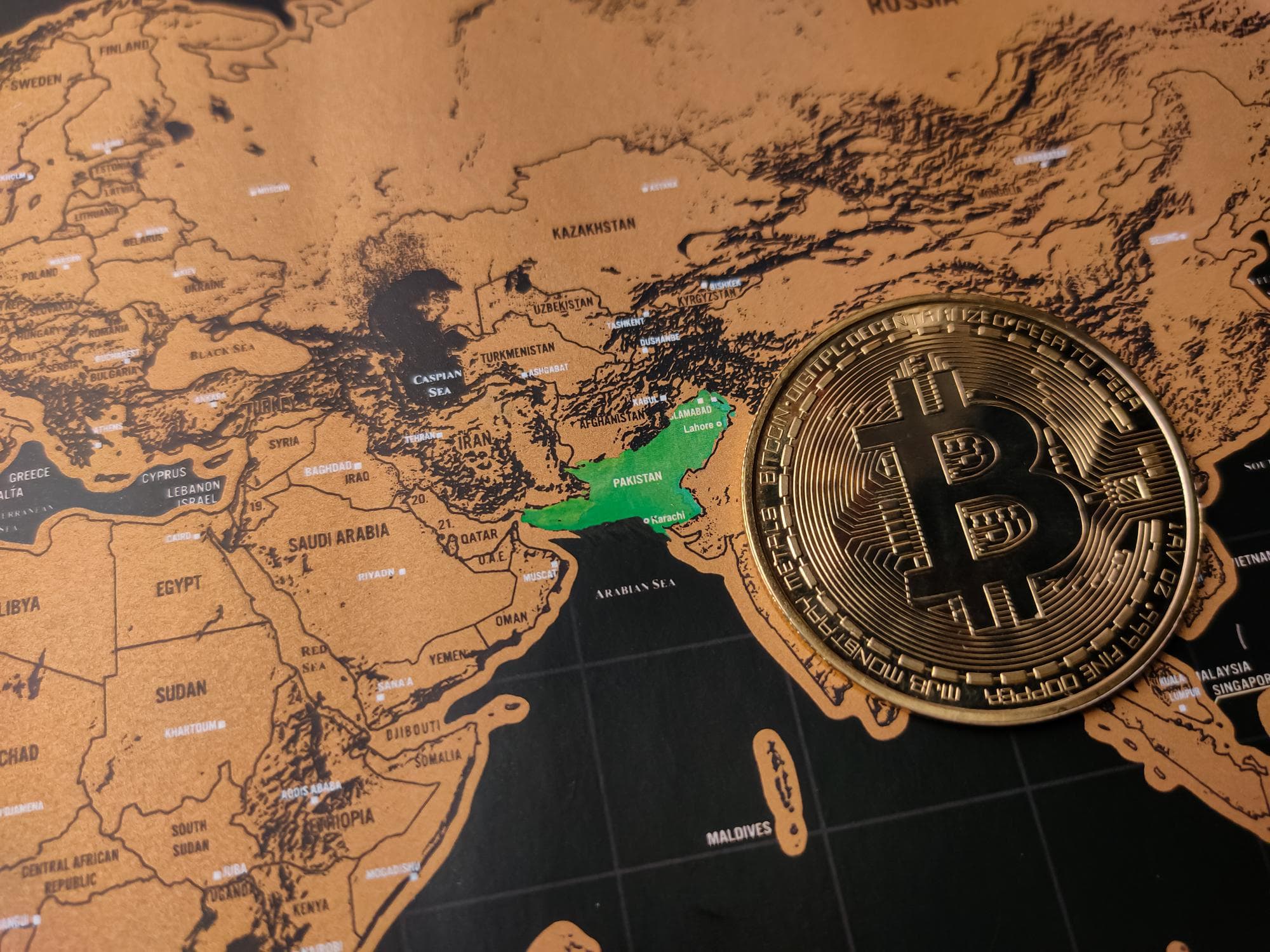
Bitcoin crossed $77,000 this week, and the immediate catalyst had nothing to do with a protocol upgrade, a new ETF filing, or a Fed pivot. It came from Iran's foreign minister stating that the Strait of Hormuz — a critical chokepoint for global oil supply — remains open.
That single diplomatic statement sent oil futures tumbling roughly 10%, eased inflation fears, and pushed Bitcoin up approximately 3.6% above $76,000. Crypto-related equities, particularly companies holding digital assets on their balance sheets, posted even larger moves as investors rotated back into crypto-exposed names after a stretch of underperformance.
The sequence matters. It tells you something about where Bitcoin sits in the global financial mind right now — and what that means for US investors trying to read the market.
The Macro Chain Reaction
The logic of the Hormuz-to-Bitcoin move isn't complicated, but it's worth tracing precisely. Geopolitical risk in the Persian Gulf raises the probability of an oil supply disruption. Oil disruptions push energy prices higher. Higher energy prices feed into inflation. Elevated inflation keeps the Federal Reserve in a restrictive posture — or delays any pivot toward rate cuts. Tight monetary policy drains liquidity from risk assets, including crypto.
When Iran signaled that the strait was open, that chain ran in reverse. Oil dropped. Inflation expectations softened. Rate-cut bets improved marginally. Risk appetite returned, and Bitcoin was among the first beneficiaries.
This is macro-correlated Bitcoin behavior — not the "digital gold hiding from the global financial system" thesis that dominated earlier cycles. It's BTC as a high-beta risk asset that responds to the same macro signals as equities, just with amplified sensitivity.
Neither framing is wholly wrong. Bitcoin has exhibited both behaviors at different moments. But right now, in April 2026, the weight of evidence points toward macro sensitivity as the dominant regime. US investors who anchor their Bitcoin thesis purely to store-of-value theory may be misreading the near-term price dynamics.
Crypto Treasury Stocks as a Bitcoin Amplifier
The equity moves that accompanied Bitcoin's rise deserve attention in their own right. Companies that hold significant digital assets on their balance sheets — a category that has grown substantially since Strategy (formerly MicroStrategy) made the model famous — had been lagging in the weeks prior. When Bitcoin broke higher this week, those names led the stock surge.
The mechanism here is straightforward: these companies function as levered Bitcoin proxies. Their market cap and balance sheet value fluctuate directly with BTC price. When Bitcoin rises, their net asset value improves, sentiment improves, and beaten-down positions get covered.
For US retail investors who want Bitcoin exposure but prefer the wrapper of a regulated equity account, these stocks offer a practical alternative to the spot ETF. But they carry an important caveat: in extended drawdowns, the leverage cuts both ways. The recent period of underperformance was a reminder of that asymmetry.
The Congressman Trade — and What It Actually Signals
One of the week's more revealing disclosures came from Capitol Hill. Rep. Sheri Biggs (R-SC) filed paperwork showing she purchased up to $250,000 worth of BlackRock's spot Bitcoin ETF (ticker: IBIT) last month. This is her second such reported purchase in roughly a year — she disclosed a similar IBIT buy last July, also valued at up to $250,000.
Biggs is publicly aligned with crypto advocacy through the Stand With Crypto Alliance, a grassroots lobbying organization launched by Coinbase.
The disclosure raises the obvious conflict-of-interest questions that have dogged cryptocurrency policymaking for years. Elected officials with direct financial stakes in crypto assets are simultaneously involved in crafting the regulatory environment those assets operate in. That dynamic warrants scrutiny, not cheerleading.
But strip out the political dimension and focus on the pure signal: a US lawmaker with access to financial advisors and institutional research is putting up to half a million dollars into the dominant Bitcoin ETF product. That's a data point about conviction at the institutional-adjacent level, whatever you think about the optics.
BlackRock's IBIT has established itself as the primary vehicle for regulated Bitcoin exposure in the US market. Its prominence in congressional disclosure filings, pension fund discussions, and institutional allocation conversations reflects how thoroughly the ETF structure has normalized Bitcoin as an investable asset class — at least in the eyes of people who manage significant sums.
What $77,000 Actually Means Technically
Bitcoin trading above $77,000 is meaningful from a structural standpoint, though it demands context. The price level represents a zone where Bitcoin had previously encountered resistance. Breaking and holding above it — rather than a brief spike followed by rejection — would carry more weight.
The broader market backdrop remains one of macro uncertainty. Trade tensions, Federal Reserve ambiguity on the rate path, and ongoing geopolitical risk haven't disappeared. Oil falling on a single diplomatic statement is not the same as a genuine de-escalation of Middle East tensions. Inflation data still needs to cooperate before the Fed changes posture in any meaningful way.
Bitcoin's sensitivity to these variables means that another geopolitical flare-up, a hotter-than-expected CPI print, or a hawkish Fed signal could unwind this week's gains faster than they accumulated. The move was real. The durability is not guaranteed.
The Practical Read for US Investors
A few things worth keeping in mind as you process this week's price action:
Macro regime awareness is not optional. If Bitcoin is trading as a risk asset correlated to inflation expectations and Fed policy, then monitoring oil prices, CPI releases, and FOMC communications is no longer peripheral research — it's core to understanding where BTC might go next.
ETF inflows remain the institutional scoreboard. The sustained institutional interest in products like IBIT is the most durable signal in this market. Congressional purchases and crypto treasury stock surges are interesting data points, but consistent ETF inflow trends are what indicate whether institutional allocation is broadening or contracting.
Short-term catalysts don't override long-term fundamentals. Bitcoin rallying because Iran made a statement about a shipping lane is a macro noise event, not a fundamental shift in the Bitcoin thesis. It's worth noting, worth understanding, but not worth building a position around in isolation.
The Hormuz rally was instructive precisely because of what drove it: external macro variables that have nothing to do with Bitcoin's technology, its supply schedule, or its adoption curve. That's the market Bitcoin is operating in right now. Understanding that clearly is more useful than pretending otherwise.
Educational only. Not financial, investment, tax, or legal advice. Do your own research. Read the full disclaimer.