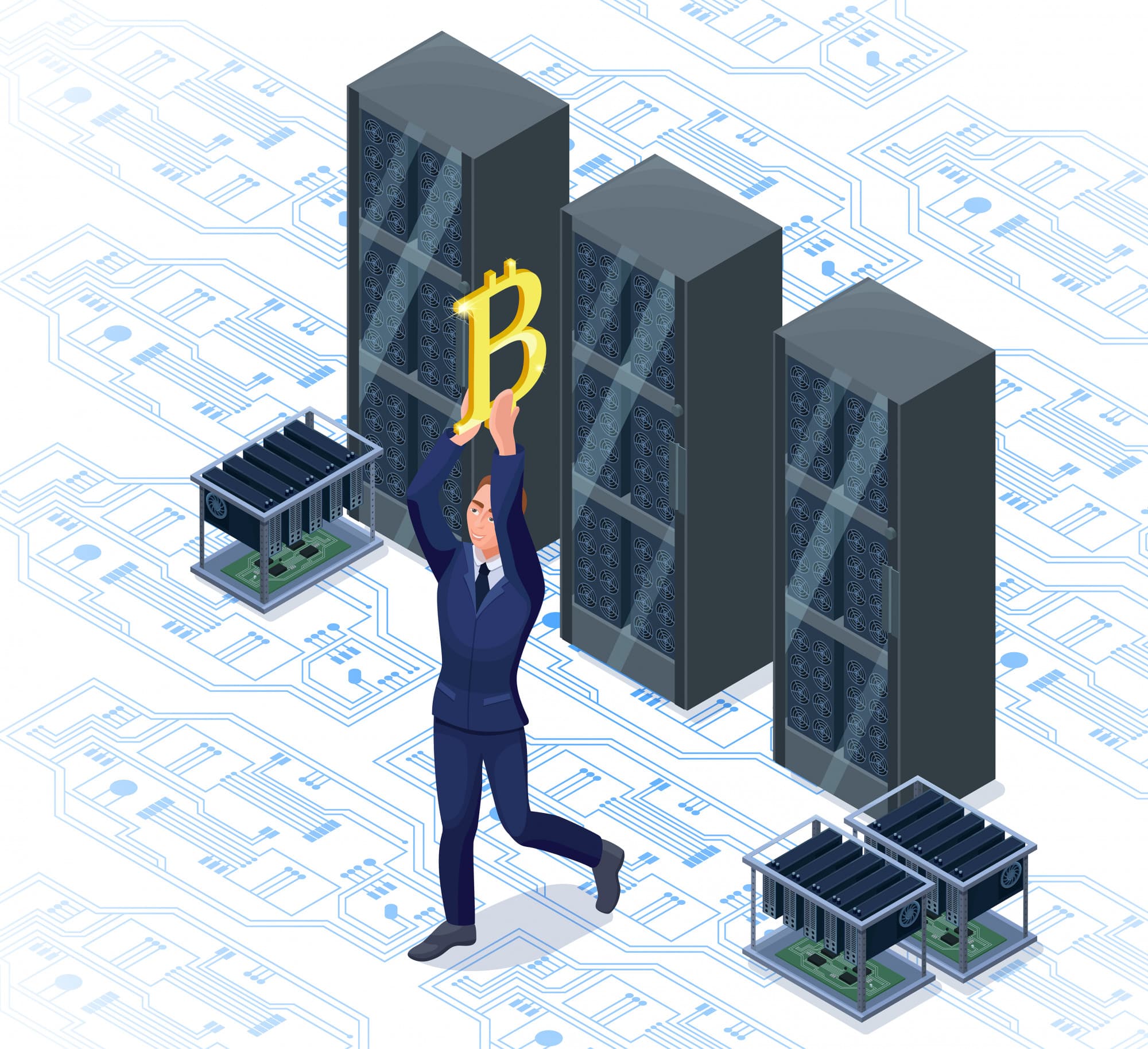
Public and private Bitcoin miners are not just “Bitcoin goes up” vehicles. They are power buyers, site operators, hardware managers, data-center developers, treasury planners, and capital allocators. Their performance depends on electricity costs, uptime, machine efficiency, financing discipline, grid relationships, cooling, land, debt, and whether management can survive the next ugly part of the cycle without selling the business one desperate decision at a time.
Mining is crypto infrastructure.
More specifically, it is energy infrastructure with crypto economics attached.
That distinction matters for U.S. investors.
The Mining Trade Is Not the Same as the Bitcoin Trade
Bitcoin miners can benefit from higher Bitcoin prices.
That does not mean they are interchangeable with Bitcoin.
A miner has operating costs. Bitcoin does not. A miner has machines that depreciate. Bitcoin does not. A miner may carry debt. Bitcoin does not. A miner has power contracts, facility costs, payroll, cooling needs, hosting arrangements, repair schedules, grid exposure, and capital spending decisions.
That makes miners more complex than the asset they produce.
In a strong Bitcoin market, that complexity can create upside. Efficient miners may expand margins, hold more coins, upgrade fleets, raise capital, and improve market sentiment. In a weak market, the same complexity can become a problem. Power costs still arrive. Debt still matters. Machines still age. Expansion plans still require funding.
For investors, the first question is not simply whether Bitcoin is bullish.
It is whether the miner can convert Bitcoin exposure into durable operating value.
That depends on the infrastructure underneath the ticker.
Power Is the Core Input
Mining starts with electricity.
Everything else comes after.
A miner with cheap, reliable power has options. A miner with expensive or unstable power has a problem, even if the Bitcoin thesis is attractive. Power cost shapes margins, site competitiveness, fleet decisions, and whether a company can keep operating during weaker price periods.
That is why U.S. mining should be analyzed like an energy business.
Where are the sites? How stable is the power supply? Are contracts fixed, variable, or exposed to market swings? Can operations curtail when needed? Does the miner have a constructive relationship with the local grid? Are facilities located where power is abundant, stranded, flexible, or politically contested?
These questions matter more than promotional language about hash rate.
Hash rate without profitable power is not a strategy. It is a machine count waiting for a margin problem.
The best mining operators understand that the power stack is the business. The ASICs are important, but they are only productive when the energy economics work.
Data Centers Are Tempting, But Not Automatic
A growing number of mining operators want to be seen as broader data-center infrastructure companies.
There is logic behind that.
Miners already think about power, cooling, land, facilities, uptime, hardware, and large-scale computing operations. In some cases, those capabilities may translate into adjacent data-center opportunities. Power access, especially, can be valuable in a market where compute demand is rising and grid connections are not instant.
But investors should be careful.
A Bitcoin mining site is not automatically a high-quality data center. Different customers may require different uptime guarantees, networking, cooling, security, compliance, contracting, and capital investment. A site that works for ASIC mining may not be ready for other forms of computing without major upgrades.
The market should separate credible infrastructure evolution from narrative drift.
A miner with real power assets, strong sites, disciplined financing, and a clear customer strategy may have optionality. A miner that simply adds “data center” language because investors like the theme should be treated with skepticism.
Power is valuable.
Execution decides whether it becomes a second business or just a better slide deck.
Hardware Discipline Still Matters
Mining hardware is a constant capital-allocation test.
ASICs get more efficient. Older machines become less competitive. New purchases require capital. Fleet upgrades can improve economics, but buying too aggressively at the wrong time can strain the balance sheet.
This is where management discipline matters.
A miner can overexpand during good conditions, assume favorable prices will last, and enter the next downturn with too much debt or too many obligations. Another miner can upgrade more carefully, preserve liquidity, and keep optionality when weaker competitors are forced to sell assets.
Investors should watch how miners finance growth.
Are they using debt responsibly? Are they diluting shareholders heavily? Are they selling Bitcoin reserves to fund operations? Are they buying machines because economics justify it, or because growth optics look good? Are they locking in terms that make sense through a cycle?
Mining rewards efficiency.
It punishes vanity expansion.
Treasury Policy Is Part of Infrastructure
A miner’s treasury strategy is not a side issue.
It is part of the operating model.
Some miners hold Bitcoin. Some sell more production to fund expenses. Some mix approaches. Each choice has tradeoffs. Holding Bitcoin can increase upside if prices rise, but it can also create liquidity pressure if operating costs need cash. Selling production can reduce balance-sheet volatility, but it may limit exposure during bull markets.
There is no single correct answer.
The right policy depends on debt, power costs, cash reserves, expansion plans, market conditions, and risk tolerance.
What matters is whether the strategy is coherent.
A miner should be able to explain how it funds operations, manages downside, preserves liquidity, and avoids being forced into bad decisions during market stress. If the treasury strategy is just “hold because Bitcoin will go up,” that is not a policy. It is a hope with accounting attached.
U.S. investors should demand more.
Mining companies are operating businesses. They need operating discipline.
Grid Relationships Are a Strategic Asset
Bitcoin mining’s relationship with power grids remains complicated.
Miners can be flexible power users. In some situations, they may help monetize excess energy, support certain grid economics, or curtail during stress. In other situations, they may face local pushback over energy use, noise, infrastructure strain, or political concerns.
The details matter.
A miner with strong local relationships and flexible operations may be better positioned than one that treats power access as merely a cost line. Permitting, community acceptance, curtailment agreements, energy sourcing, and grid coordination can all affect long-term site value.
For U.S. miners, this is especially important because mining is not just a digital business.
It is physically located somewhere.
That means local politics, utility relationships, land use, and energy policy can shape outcomes. Investors who ignore those factors are missing part of the risk.
Mining Infrastructure Affects the Bitcoin Network
Mining is also about network security.
Bitcoin’s proof-of-work system depends on miners committing real-world resources to secure the chain. The distribution, economics, and resilience of mining operations affect the health of the network.
That does not mean every miner is equally important.
But it does mean mining infrastructure has broader market relevance.
If mining becomes overly concentrated among a small set of operators, regions, energy sources, or financing models, network resilience becomes a more important question. If miners are financially stressed, selling pressure and infrastructure investment decisions may affect market dynamics. If energy economics shift, the competitive map can change.
For Bitcoin holders, mining is not just a stock-market subsector.
It is part of the system that makes Bitcoin work.
What Readers Should Watch Next
First, watch power costs. They are the foundation of mining economics.
Second, watch balance sheets. Debt, liquidity, and treasury policy decide who survives weaker markets.
Third, watch fleet efficiency. Better machines matter, but only if upgrades are financed sensibly.
Fourth, watch site quality. Power access, cooling, land, and grid relationships can create real advantages.
Fifth, watch data-center claims with skepticism. Some miners may have valuable compute infrastructure. Others may just have a fashionable narrative.
Sixth, watch Bitcoin treasury policy. Holding coins can add upside, but it can also create cash-flow risk.
Seventh, watch management discipline. Mining is capital intensive. Bad timing gets expensive quickly.
The Grounded Takeaway
There is no fresh mining or infrastructure catalyst in today’s supplied feed.
That makes the honest story a framework, not a forced headline.
Bitcoin mining should be judged as a power-management and infrastructure business, not just a leveraged Bitcoin chart. The best operators will likely be the ones with durable electricity economics, disciplined fleet upgrades, strong site control, sensible treasury policy, and enough balance-sheet strength to keep operating when the cycle turns.
Mining can still offer upside.
But investors should stop treating every miner as a cleaner version of Bitcoin exposure. These are operating companies with real-world constraints.
In this part of crypto, the rails are made of power contracts, machines, cooling systems, debt schedules, and management decisions.
That is less romantic than digital gold.
It is also where the business actually lives.
Educational only. Not financial, investment, tax, or legal advice. Do your own research. Read the full disclaimer.