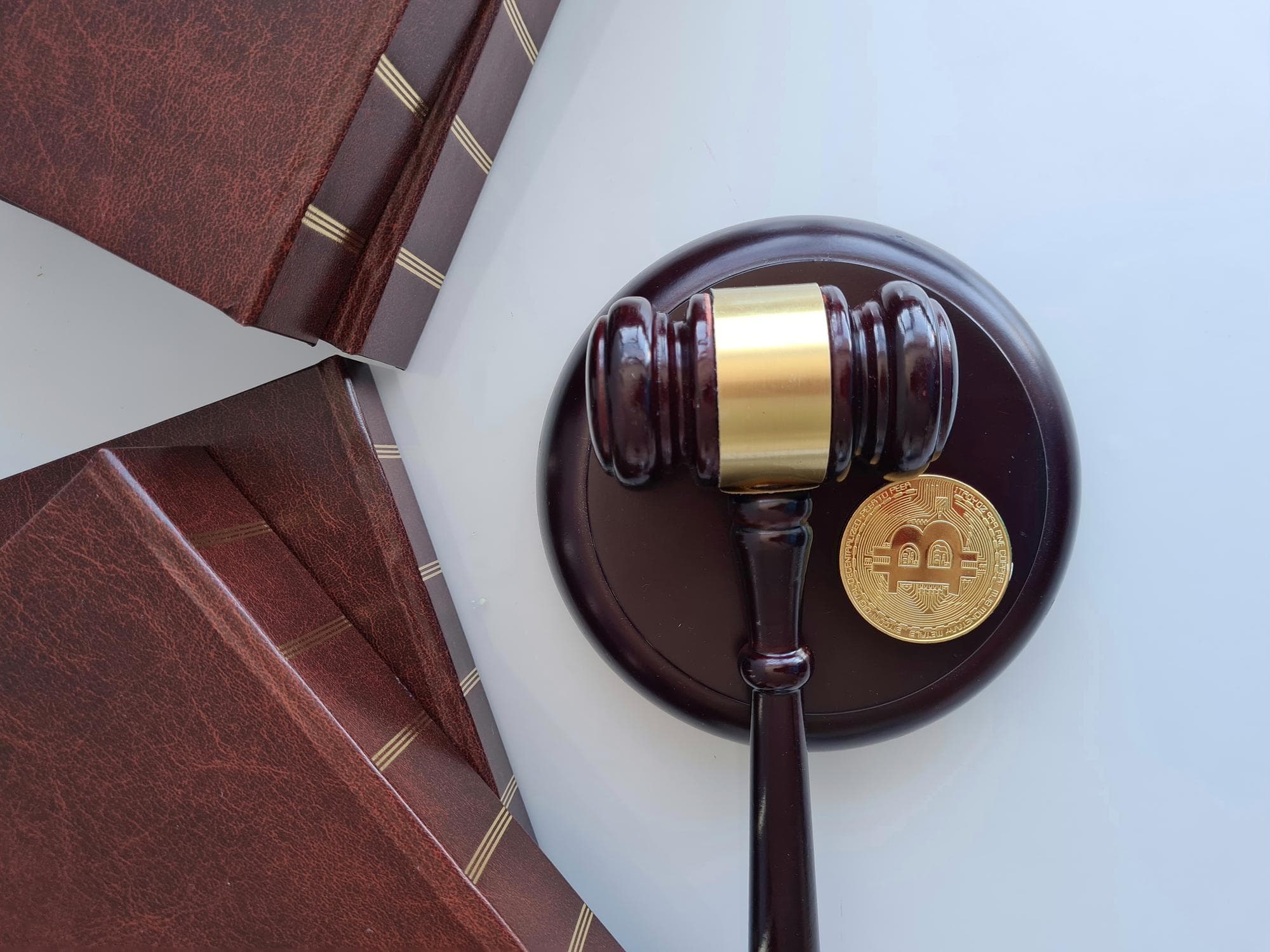
Crypto regulation is usually framed around agencies: the SEC, the CFTC, Treasury, banking supervisors, Congress. That is still where much of the public fight happens. But for crypto businesses and investors, the courts may be where some of the more practical rules are quietly taking shape.
A New York judge has stayed a lawsuit seeking ownership of nearly 40,000 bitcoin wallets and set a July hearing on a proposed amicus brief, according to The Block. The facts available from the source context are limited, but the legal posture alone is worth paying attention to. A case centered on who can claim ownership over a large set of bitcoin wallets is not a narrow crypto-market story. It touches custody, property rights, evidence, identity, and the legal treatment of control over digital assets.
That matters because crypto’s next regulatory phase is not only about whether an asset is legal to list, trade, tokenize, or wrap into a fund product. It is also about whether the legal system can reliably answer basic operational questions: Who owns this wallet? What proves control? When does a court recognize a claim over blockchain-linked property? What happens when those claims collide with custodians, exchanges, creditors, estates, law enforcement, or other third parties?
Those are not theoretical questions anymore. They are the plumbing questions underneath market access.
The Courtroom Is Becoming Part of the Crypto Stack
Crypto likes to sell itself as self-executing infrastructure. Private keys control assets. Public ledgers show movement. Smart contracts settle without waiting for a back office.
That story is useful, but incomplete.
In the real world, crypto assets sit inside legal relationships. Investors die. Businesses fail. Wallets are disputed. Creditors make claims. Exchanges freeze accounts. Courts issue orders. Regulators subpoena records. Bankruptcy estates try to recover assets. Companies use custodians, market makers, administrators, lenders, and counterparties. Even when the chain keeps running, the legal system still decides who has enforceable rights when something goes wrong.
A lawsuit seeking ownership of nearly 40,000 bitcoin wallets sits directly inside that gap between technical control and legal ownership. The blockchain can show addresses and transactions. It cannot, by itself, settle every offchain claim about who is entitled to the assets connected to those addresses.
That distinction is becoming more important as crypto moves from retail speculation into institutional products, corporate balance sheets, tokenized securities, and regulated derivatives markets.
Why Wallet Ownership Is a Policy Issue
This kind of case belongs in the regulation conversation because property rights are market infrastructure. If investors and businesses cannot predict how courts will handle wallet ownership disputes, risk becomes harder to price.
For a retail holder, the issue might look simple: whoever controls the private key controls the bitcoin. But businesses cannot operate on that assumption alone. A company may hold crypto through a custodian. A fund may have multiple service providers. A lender may have collateral rights. A bankruptcy estate may claim assets moved before a filing. A law enforcement agency may assert seizure authority. A family member or business partner may dispute who had lawful ownership even if one person had technical access.
That is where courts matter. They translate messy real-world claims into enforceable outcomes.
For exchanges and custodians, these disputes can become operationally expensive. They need policies for freezes, legal notices, competing claims, wallet attribution, account records, compliance logs, and customer communications. For investors, the risk is different but just as practical: if ownership cannot be cleanly documented, recovery can become slow, uncertain, and expensive.
The lesson is not that self-custody is broken. It is that self-custody is not a substitute for legal clarity.
The SEC Story Is Moving in Parallel
The wallet ownership case is not happening in isolation. The same news set includes another signal from the regulated side of crypto: Securitize, a real-world asset tokenization platform, moved closer to going public through a SPAC merger with Cantor Equity Partners II after the SEC declared its S-4 registration statement effective, according to CoinTelegraph.
That is a very different kind of regulatory event, but it points in the same direction. Crypto businesses are being pulled into formal legal wrappers: public-market disclosures, securities filings, exchange listings, compliance processes, and court-supervised disputes.
The contrast is useful. On one side, tokenization companies are trying to fit blockchain-based assets into public-market structures. On the other, courts are being asked to handle disputes over wallet ownership. Together, they show a market becoming less defined by slogans and more defined by enforceable claims.
For U.S. crypto companies, that is the shift to watch. The question is not simply whether regulators become friendly or hostile. The more durable question is whether the legal system can make crypto legible enough for serious capital, without stripping away the features that made the technology useful in the first place.
Market Access Now Depends on Legal Clarity
CME’s launch of bitcoin volatility index futures adds another piece to the same picture. The product allows traders to speculate directly on expected bitcoin volatility rather than bitcoin’s spot price, according to CoinDesk. Monarq and DV Chain reportedly placed early trades.
This is not a courtroom story, but it is a market-structure story. CME products serve a different audience than offshore perpetuals or retail spot platforms. They sit inside a regulated derivatives environment where margining, clearing, reporting, and legal enforceability matter.
That is why the court and regulatory developments belong in the same frame. As crypto products become more institutional, the market needs more than price exposure. It needs dispute resolution, custody standards, disclosure regimes, and enforceable ownership rules.
A volatility contract can help traders hedge or express views on bitcoin’s risk profile. A public listing can give a tokenization company access to broader capital markets. A court ruling can shape how ownership claims are treated when wallets become disputed property. These are all different expressions of the same maturation process: crypto is being translated into systems that traditional finance and the legal system can actually process.
That translation is not always bullish. It can add cost, paperwork, delays, and constraints. But it also determines whether large pools of capital are comfortable participating beyond short-term trading.
What Investors Should Watch
The immediate takeaway from the New York wallet case is not to guess who will win. The source context does not provide enough detail for that, and the case has been stayed with a July hearing ahead on a proposed amicus brief.
The better question is what legal issues the case surfaces.
Investors should watch whether courts treat wallet control, account records, transaction history, contractual rights, and external evidence as separate pieces of the ownership puzzle. That matters for anyone who holds assets through a custodian, operates a business treasury, uses multisig, participates in lending markets, or expects heirs or partners to recover assets later.
Businesses should watch for the operational burden. If wallet ownership disputes become more common, compliance teams will need cleaner records, stronger custody documentation, and better response procedures for legal claims. “Onchain” does not remove the need for records. In some disputes, it may raise the standard for them.
Exchanges and custodians should also assume that courts will keep asking for more legible processes. Freezing, transferring, or recognizing claims over crypto assets cannot be improvised when the amounts are large and the counterparties are sophisticated.
The Takeaway
Crypto’s U.S. policy story is bigger than the next SEC headline. Agency action still matters, but the next phase will also be shaped by courts deciding how digital assets fit into property law, custody disputes, and market infrastructure.
The New York lawsuit over nearly 40,000 bitcoin wallets is a reminder that crypto’s hardest legal questions are becoming more concrete. Not “what is crypto?” but “who owns this wallet, who can prove it, and what happens next?”
That is less flashy than a new token listing or an ETF flow update. It is also more important for the businesses trying to build durable crypto rails in the United States.
Educational only. Not financial, investment, tax, or legal advice. Do your own research. Read the full disclaimer.