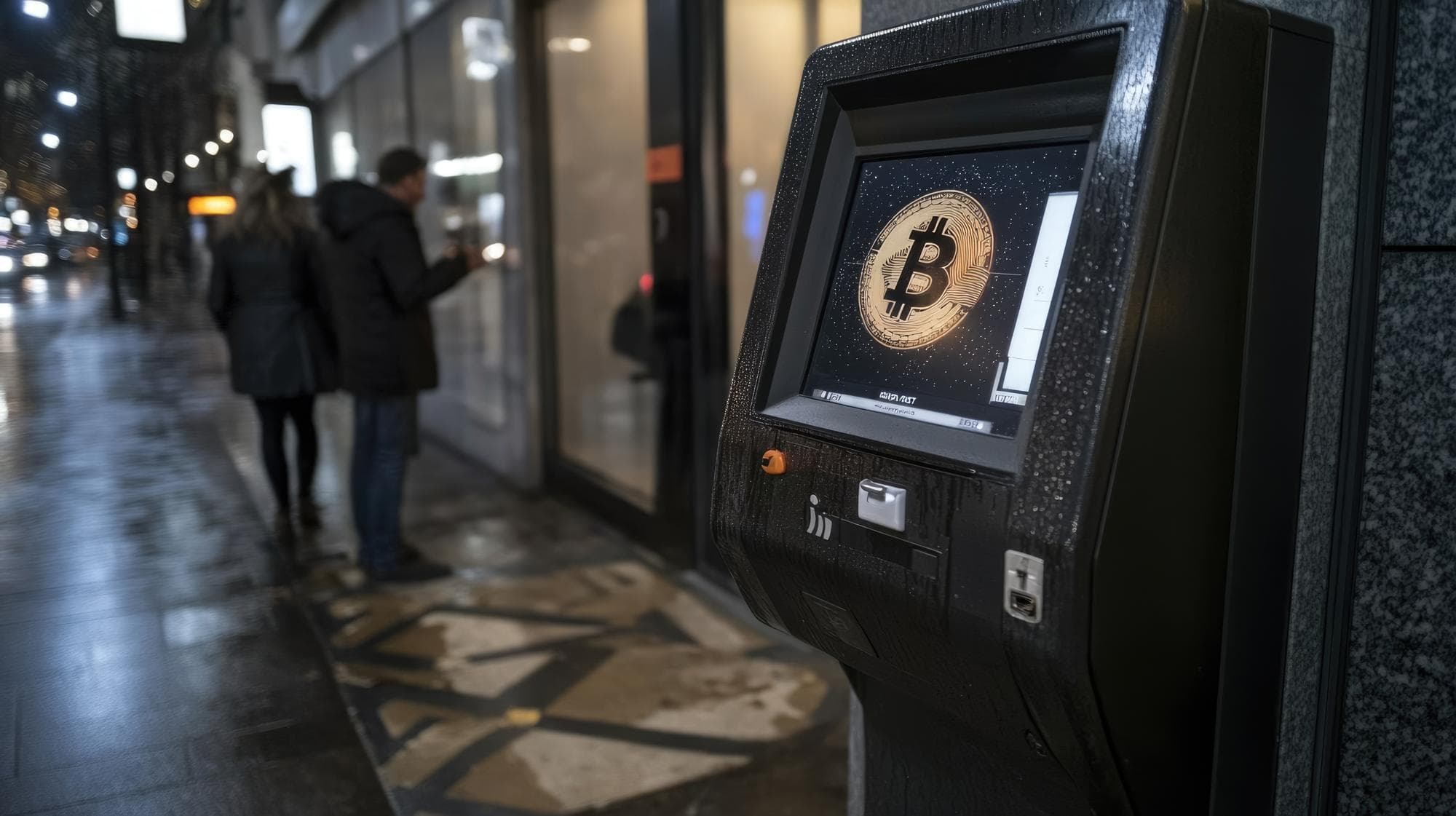
Crypto regulation in the U.S. is not only being written in Washington. Increasingly, it is being written by state lawmakers looking at the most visible, least forgiving part of the retail market: the crypto ATM.
Delaware and New Jersey have advanced legislation that would ban cryptocurrency ATMs, according to Cointelegraph. The move matters because these machines sit at the intersection of three issues regulators understand well: consumer fraud, cash movement, and retail access to financial products that many users do not fully understand.
That does not make every crypto ATM user a victim, and it does not make every operator reckless. But it does show where the regulatory pressure is building. When lawmakers believe a product is being used disproportionately in scams, the debate tends to move away from innovation and toward blunt consumer-protection tools.
For crypto businesses, this is the warning shot. The next phase of U.S. crypto policy may not be limited to SEC lawsuits, ETF filings, or stablecoin bills. It may also come from states deciding which crypto access points are too risky to tolerate.
The State-Level Problem Crypto Cannot Ignore
The Delaware and New Jersey proposals are notable because they would go beyond licensing, disclosures, or transaction limits. Cointelegraph reported that both states have advanced legislation that would completely ban crypto ATMs, a measure already enacted in only three U.S. states.
That distinction matters. A ban is not a compliance tweak. It is a judgment that the activity itself is producing enough harm, or enough enforcement burden, that lawmakers are willing to remove the channel.
Crypto ATMs have always occupied a complicated place in the market. They offer a familiar cash-in interface for people who may not use exchanges, bank-linked apps, or brokerage accounts. For some users, that accessibility is the point. A machine in a convenience store can feel simpler than opening an account, passing identity checks, linking a bank, and learning how wallets work.
But that same simplicity is what makes the model politically vulnerable. A person can be pressured into sending money quickly. A scammer can walk a victim through the steps over the phone. A machine designed for access can become a payment rail for fraud.
State lawmakers do not need to settle the entire debate over crypto’s future to act on that concern. They only need to decide that the local consumer harm is too visible.
Why This Is Different From Washington’s Crypto Fight
Most national crypto regulation focuses on classification and market structure. Is a token a security? Who supervises spot markets? How should stablecoin reserves work? What authority should the CFTC have? What should exchanges be allowed to list?
Crypto ATMs raise a narrower but politically sharper question: what happens when crypto touches the public through cash-based retail channels?
That is a different regulatory terrain. It is less about whether blockchain networks are useful and more about whether the access point creates unacceptable risk for ordinary consumers.
This is where crypto firms can misread the room. A business may believe it is providing lawful access to digital assets. Lawmakers may see an elderly resident getting walked through a fraudulent payment. Those are not the same story.
For exchanges and app-based platforms, the lesson is not that their business model is identical to ATM operators. It is that regulators are separating crypto channels by perceived consumer risk. The more a product looks like fast, irreversible retail payment infrastructure, the more likely it is to draw scrutiny from consumer-protection officials.
Market Access Is Becoming Conditional
The broader regulatory pattern is straightforward: access is being allowed where oversight, disclosures, and accountability are strongest, while weaker access points face pressure.
That helps explain why ETFs, brokerages, custodians, and institutional platforms can keep advancing even as state lawmakers target crypto ATMs. The regulated wrapper matters. It gives policymakers something they recognize: supervised intermediaries, paper trails, compliance departments, and clearer customer recourse.
Crypto ATMs offer a tougher case. Even if operators follow rules, the public perception is shaped by the use case lawmakers hear about most often. If the machines are associated with scams, then the operator’s compliance posture may not be enough to save the channel.
That is uncomfortable for crypto advocates, but it is not surprising. Financial regulation has always treated distribution differently from product design. A risky product sold through a tightly supervised channel may survive. A simpler product distributed through a channel associated with abuse may not.
For investors, this is worth watching because it shows how crypto access can narrow without a nationwide ban. The U.S. does not need one sweeping federal law to change market behavior. State-by-state restrictions can reshape where retail users encounter crypto and which companies are allowed to serve them.
The Compliance Burden Will Not Be Evenly Shared
If more states follow Delaware and New Jersey, the burden will fall unevenly across the crypto market.
Large exchanges can adapt. They already operate with identity checks, transaction monitoring, legal teams, and state-by-state licensing obligations. They may even benefit if retail access shifts away from kiosks and toward regulated platforms.
Smaller ATM operators face a harder path. A patchwork of state restrictions can make expansion expensive, uncertain, and politically risky. Even states that stop short of bans may impose tighter limits, stronger warnings, or tougher reporting standards if the scam narrative keeps gaining traction.
There is also a reputational effect. When lawmakers describe a crypto access point mainly through the lens of scams, banks, landlords, payment processors, and insurers pay attention. The legal risk is only one piece of the problem. The operating environment can become less friendly long before a nationwide rule exists.
That is the practical point for crypto businesses: compliance is not just about meeting the written rule. It is about understanding which parts of the business regulators now view as high-friction, high-harm, or politically indefensible.
What Retail Users Should Take From This
For retail users, the lesson is blunt. If someone tells you to use a crypto ATM to resolve a problem, pay a bill, protect money, claim a prize, or move funds under pressure, assume something is wrong.
That is not a technical crypto opinion. It is basic fraud hygiene. Irreversible transactions and urgent instructions are a bad pairing.
The state-level crackdown also shows why access convenience can carry hidden costs. A machine may be easy to use, but ease of use does not guarantee price transparency, suitability, or safety. In crypto, the simplest interface can still connect to an asset that settles quickly and gives victims little room to recover funds.
Investors should separate two questions that often get blended together. Crypto as an asset class may continue moving into regulated financial products. Crypto as an instant cash-based payment rail for the general public may face a much tougher consumer-protection test.
Both can be true at the same time.
The Takeaway
Delaware and New Jersey’s crypto ATM bills are not the biggest national crypto policy story by market size. They are important because they show where state regulators may act fastest: retail channels tied to visible consumer harm.
That should matter to exchanges, wallet companies, ATM operators, and investors. U.S. crypto regulation is not arriving as one clean federal package. It is arriving through ETFs, court cases, agency rules, state bills, banking decisions, and consumer-protection fights.
The crypto ATM debate is part of that larger sorting process. Access will remain available where regulators believe there is enough supervision. Access points associated with scams will have a harder time defending themselves.
That is not a victory lap for regulators or a death notice for crypto. It is a reminder that distribution matters. In U.S. crypto policy, the question is no longer only what the asset is. It is also how the public gets to it, who stands between the user and the transaction, and what happens when something goes wrong.
Educational only. Not financial, investment, tax, or legal advice. Do your own research. Read the full disclaimer.