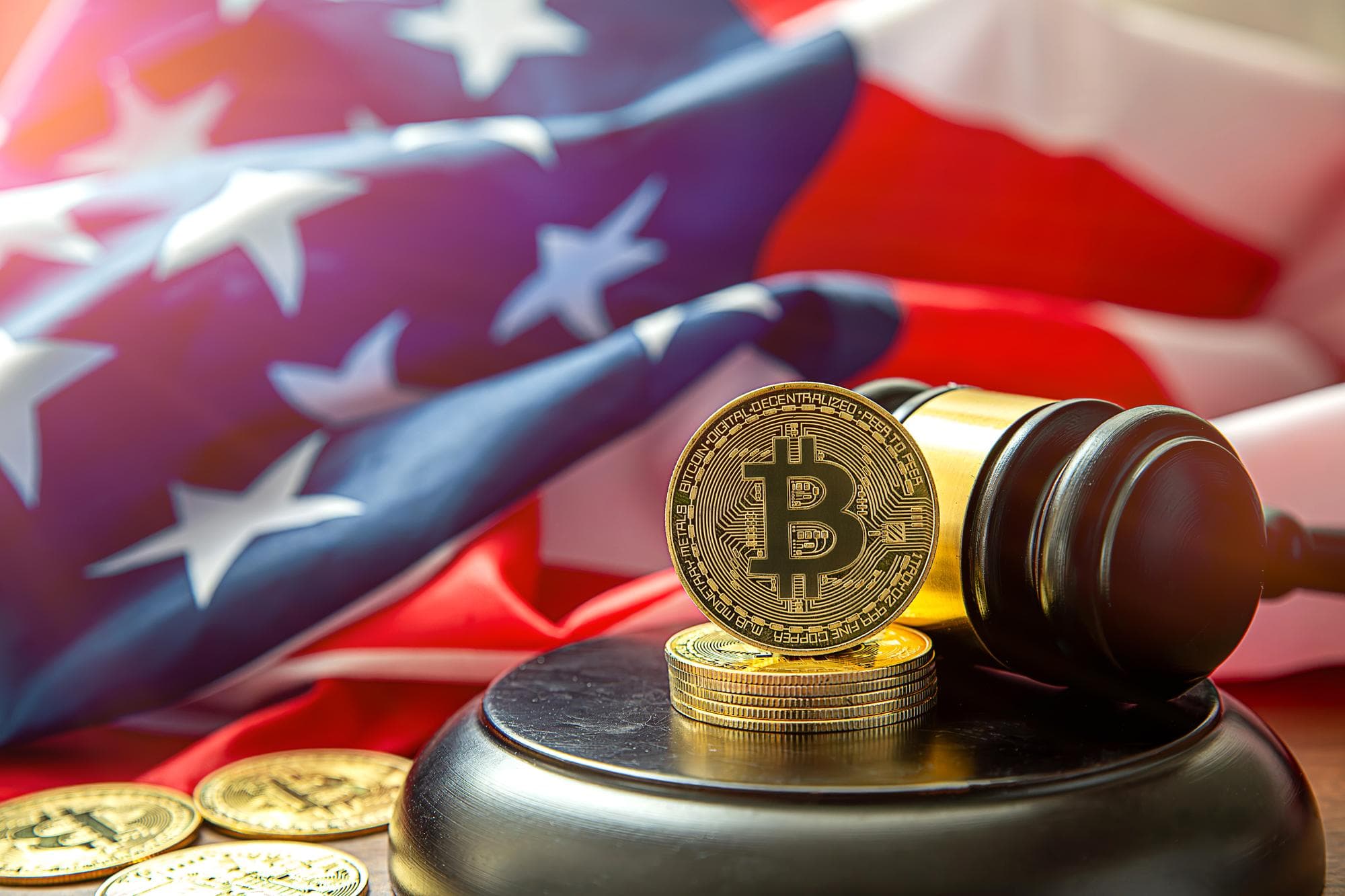
Political Access Is Becoming Part of the Crypto Stack
Crypto has spent years trying to become harder for US policymakers to ignore. The early strategy was mostly defensive: fight enforcement actions, lobby against hostile bills, fund trade groups, and argue that existing rules were not written for decentralized networks, tokens, wallets, stablecoins, or prediction markets.
That strategy has not disappeared. But it is being joined by something more direct: public alignment with political events, public officials, and cultural moments that sit outside the normal financial-policy lane.
A White House UFC event is not a committee hearing. It is a spectacle. That is exactly why the branding matters. For a crypto firm, appearing in that environment offers something a legal memo cannot: mass-market association with power, patriotism, and access.
Polymarket’s planned role is especially notable because prediction markets sit close to some of the hardest policy questions in crypto. These platforms are not just trading venues in the ordinary sense. They touch elections, public events, sports, culture, and financial speculation. That puts them near the border of derivatives regulation, gambling law, consumer protection, and political information markets.
Exodus, meanwhile, represents a different part of the crypto economy: self-custody and user-facing wallet infrastructure. Wallet companies have their own policy exposure, particularly as regulators and lawmakers decide how far compliance obligations should extend beyond centralized exchanges.
Neither company’s involvement in a political sports event changes its legal obligations. But it does show the industry’s preferred direction of travel. Crypto firms want to be treated less like fringe financial experiments and more like normal American companies with a seat at the public table.
Visibility Does Not Replace Legal Clarity
The risk is that political visibility can be mistaken for regulatory progress.
A company can have branding at a high-profile government-adjacent event and still face unresolved questions about licensing, disclosures, market integrity, consumer safeguards, sanctions compliance, tax treatment, custody, or derivatives oversight. That distinction matters for small businesses and retail investors because political momentum often arrives before legal details do.
The US crypto market has seen this pattern before. A narrative shifts first. Then capital follows. Then regulators, courts, or state officials test the edges after the fact.
That is not a clean way to build durable infrastructure.
For exchanges, the central question remains whether more assets and products can be listed under predictable federal rules. For stablecoin issuers and payment companies, the question is how reserves, redemptions, banking relationships, and state-versus-federal oversight will be handled. For wallets, the question is whether software providers can remain infrastructure providers or whether they will be pulled deeper into compliance obligations. For prediction markets, the question is whether event contracts can scale without constantly colliding with state and federal boundaries.
None of those questions are answered by being near the White House stage.
But the event still affects the political environment around those questions. It normalizes the presence of crypto companies in mainstream political culture. That can make future policy concessions easier to defend. It can also make future enforcement fights more politically charged.
The Industry Is Learning From Traditional Finance
This is not unique to crypto. Banks, exchanges, payment networks, brokers, asset managers, and fintech companies have long treated Washington access as part of the business model.
Financial firms sponsor conferences, hire former regulators, fund policy research, build PAC infrastructure, and place executives near the policy conversation. Crypto used to present itself as an alternative to that world. Now it is behaving more like it.
That shift is rational. If crypto businesses want banking access, ETF approvals, stablecoin legislation, tokenization rules, and exchange clarity, they need political durability. Technical merit is not enough. Market demand is not enough. The industry needs lawmakers and regulators to see crypto as a normal constituency with jobs, users, vendors, tax revenue, campaign relevance, and mainstream consumer touchpoints.
A White House UFC event is an unusually loud version of that playbook. It turns policy access into cultural access.
For retail investors, that does not mean the companies involved are safer. It means the industry is becoming more politically sophisticated.
That is a different claim.
The Market Access Question Is Still Unsettled
The broader source context also shows why political access is not the same as product access. Cointelegraph reported that major crypto exchanges canceled SpaceX IPO allocations and promised refunds after users seeking tokenized exposure to the IPO were left empty-handed.
That is a separate story, but it points to the same unresolved issue: crypto platforms are trying to offer access to markets that were not built around crypto rails. Sometimes that means private-company or IPO-linked exposure. Sometimes it means prediction markets. Sometimes it means tokenized securities, stablecoin settlement, or onchain credit.
The common thread is market access.
Crypto’s pitch to users has often been simple: faster access, broader access, fewer intermediaries. US law is less simple. If a product looks like securities exposure, derivatives exposure, betting exposure, banking activity, or payment infrastructure, regulators will usually care about the wrapper, the customer base, the disclosures, and the entity offering it.
That is why the SpaceX allocation issue belongs in the same conversation as the White House event, even though the stories are different. One shows crypto firms gaining cultural and political visibility. The other shows that ambitious access products can still break down when they meet real-world allocation, compliance, or distribution limits.
Visibility helps the industry get heard. It does not make every product legally or operationally ready.
Why It Matters for Crypto Businesses
For crypto founders, the lesson is not to chase political theater. The lesson is to understand that US legitimacy now has several layers.
The first layer is technical: does the product work, and can users understand the risks?
The second is operational: can the company handle custody, refunds, disclosures, support, compliance, security, and counterparty issues under stress?
The third is legal: does the product fit within existing rules, or is there a credible path to new rules?
The fourth is political: does the company have enough public and institutional support to survive scrutiny?
Crypto companies increasingly need all four. A strong brand without legal footing is fragile. A clever product without operational controls is a lawsuit waiting for a trigger. A compliant structure without distribution may never matter. Political access without product discipline can backfire.
That is especially true in the US, where crypto policy is still fragmented across federal agencies, state regulators, courts, and Congress. A company may win favor in one venue while facing risk in another.
What Investors Should Watch
The investor takeaway is not that crypto has “won” Washington. That would be too neat, and too early.
A more useful question is whether political access is turning into enforceable policy, bankable rules, and products that survive contact with regulators. Watch for the boring evidence: licenses, registrations, court outcomes, rule proposals, statutory language, custody standards, reserve reports, exchange approvals, and clear customer disclosures.
Branding around a White House event can move perception. It can help crypto firms look less like outsiders. It may also encourage more companies to compete for political adjacency as part of their growth strategy.
But perception is not protection.
The grounded read is that crypto’s US strategy is maturing. The industry is pairing legal fights and policy lobbying with mainstream political branding. That may improve its odds in Washington, but it also raises the stakes. Once crypto companies ask to be treated like major financial and technology players, they should expect to be judged that way.
Educational only. Not financial, investment, tax, or legal advice. Do your own research. Read the full disclaimer.