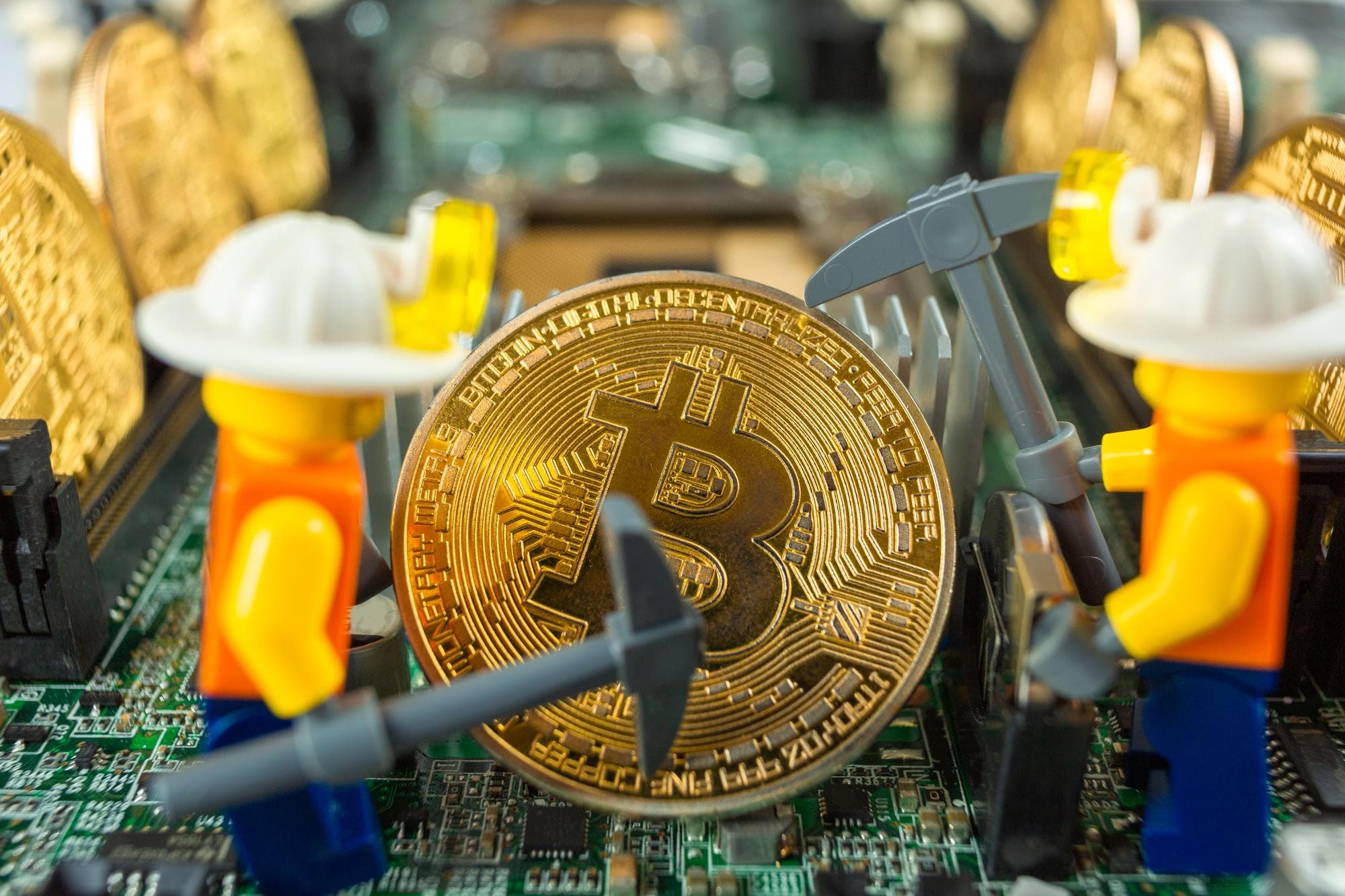
Bitcoin miners used to be judged mainly by one question: how efficiently can they turn electricity into bitcoin?
That question still matters. But it is no longer the whole story.
IREN’s acquisition of Nostrum, which Cointelegraph says adds about 490 megawatts of secured power in Spain, is another sign that the mining business is being rewritten around power access, data-center optionality, and AI cloud demand. The company is still a bitcoin miner. But the strategic signal is broader: secured energy capacity is becoming the real asset, and mining is only one possible use for it.
That matters for U.S. investors even though this specific deal is in Europe. Public bitcoin miners have spent the last few years trying to convince the market they are not just leveraged bitcoin proxies. The AI infrastructure boom gives them a more credible argument, but also a harder operating test. Power contracts, grid access, cooling, site development, and customer demand now matter as much as hash rate.
In a market where bitcoin’s own momentum remains tied to macro headlines and geopolitical risk, that distinction is not cosmetic. It may be the difference between a miner trading like a commodity business and one being valued like infrastructure.
Mining’s Center of Gravity Is Shifting
The basic mining model is simple but unforgiving. A miner buys machines, secures electricity, runs hashes, earns bitcoin, and tries to keep operating costs below revenue. When bitcoin rises, the model looks brilliant. When bitcoin falls or difficulty rises, margins compress quickly.
That cyclicality has always made mining equities volatile. They often behave like high-beta bitcoin exposure with added operational risk.
The AI data-center angle changes the pitch. If a miner controls large-scale power capacity, it may be able to sell compute services, lease infrastructure, host high-performance workloads, or build a hybrid model that shifts capacity between bitcoin mining and other forms of compute. That does not remove risk. It changes what investors need to analyze.
IREN’s Spain move fits that pattern. The key detail in the supplied source is not simply that the company is expanding geographically. It is that the acquisition adds roughly 490 megawatts of secured power as the company builds out a European AI cloud platform. In plain English: this is about controllable energy capacity, not just more machines.
For U.S. readers, the read-through is clear. The scarce input is not ASICs. It is not marketing. It is not even necessarily bitcoin exposure. It is reliable, scalable power tied to sites that can actually be developed.
Why AI Makes Miners More Interesting, and More Complicated
Bitcoin mining and AI data centers are not the same business.
Mining can tolerate more interruptibility than many enterprise AI workloads. Miners can shut down during periods of grid stress or unfavorable power prices. AI cloud customers tend to demand reliability, service quality, networking, redundancy, and support. A warehouse full of miners is not automatically an AI data center.
That is the part retail investors should not skip.
Still, miners have some advantages. They understand power procurement. They already operate high-density compute facilities. They know how to manage heat, equipment cycles, uptime, and site-level economics. Many also have relationships with utilities and local power markets that are difficult to replicate quickly.
The market is beginning to separate miners with real infrastructure from miners with a good story.
Secured megawatts are not revenue. They are an option. The value of that option depends on whether the company can convert power rights into productive sites, obtain the right equipment, sign credible customers, and manage capital costs without diluting shareholders into dust. That last part matters. Data centers are expensive. AI infrastructure can turn into a capital sink if demand assumptions are too loose or financing costs move against the operator.
IREN’s acquisition does not prove the model works. It shows where management believes the model is going.
Bitcoin Price Action Is Not Giving Miners Much Cover
The timing also matters because the broader crypto market is not giving miners a clean tailwind.
CoinDesk reported profit-taking across bitcoin, ether, and solana as traders waited on the Iran signing. Cointelegraph separately framed bitcoin’s recovery as dependent on the U.S.-Iran deal holding, with momentum still weak. Whether those headlines resolve positively or negatively, the point is that bitcoin is trading like a macro-sensitive asset right now.
That leaves miners in a difficult position. If bitcoin breaks higher, mining revenue improves and the equity story gets easier. If bitcoin stalls, miners need another reason for investors to care.
AI infrastructure has become that reason.
But investors should be careful with the framing. A miner does not become a high-quality infrastructure company just by using the letters “AI” in a presentation. The test is execution. How much power is actually secured? What are the development timelines? Are the sites suitable for non-mining workloads? Is there customer demand? How much capex is required? What happens if AI compute pricing cools?
Those are infrastructure questions, not crypto narrative questions.
The U.S. Market Read-Through
For U.S. miners and investors, the IREN move reinforces a broader market shift: power portfolios are becoming the center of valuation.
The strongest miners may be the ones that can credibly answer three questions.
First, can they mine profitably through bitcoin cycles?
Second, can they monetize power capacity outside of mining when the economics make sense?
Third, can they do both without losing operational focus?
That third question is underrated. Diversification can be smart, but it can also become a way to blur a weak core business. Running bitcoin miners, developing AI cloud infrastructure, negotiating power agreements, and serving enterprise customers are different disciplines. Companies that overpromise across all of them deserve scrutiny.
The better version of the strategy is more measured. A miner with low-cost power and flexible sites can treat bitcoin mining as one compute workload among several. When mining economics are strong, it can allocate capacity toward mining. When AI or high-performance computing demand offers better returns, it can shift. That flexibility is valuable if the company has the balance sheet and technical capability to use it.
For smaller investors, this means mining stocks should not be analyzed only by bitcoin price sensitivity anymore. The old shortcut was simple: bullish on bitcoin, buy miners. That was never perfect, but it was understandable.
Now the work is more detailed. Investors need to look at site quality, power costs, contracted capacity, debt, capex needs, customer concentration, and how much of the AI story is actually signed versus aspirational.
Infrastructure Is the Cleaner Story Than Hype
The more grounded interpretation is that bitcoin mining is being absorbed into the broader digital-infrastructure market.
That is not automatically bullish. It means miners are competing in a tougher arena. Their rivals are not just other miners. They are data-center operators, cloud providers, utilities, hyperscalers, and industrial power buyers. Everyone wants power. Everyone wants sites. Everyone wants favorable grid treatment.
The miners that already control large power positions may have an edge. The miners still looking for cheap energy after the fact may find the market less forgiving.
IREN’s European expansion is a useful marker because it points to the asset the market is starting to reward: not just deployed hash rate, but future control over compute capacity. The bitcoin network still needs miners. But mining companies increasingly need to prove they are more than balance sheets full of machines tied to a volatile commodity.
The Takeaway
IREN’s Nostrum acquisition is not just another mining expansion headline. It is part of a bigger shift in how the sector wants to be valued.
The most important asset in bitcoin mining is becoming the same asset driving the AI data-center race: secured, scalable power. That gives miners a more durable infrastructure story, but only if they can turn megawatts into real revenue without burying shareholders under capex and dilution.
For investors, the takeaway is simple. Do not treat every miner’s AI pivot as proof of reinvention. Treat it as an operating claim that needs evidence. Power is valuable. Execution decides who captures that value.
Educational only. Not financial, investment, tax, or legal advice. Do your own research. Read the full disclaimer.