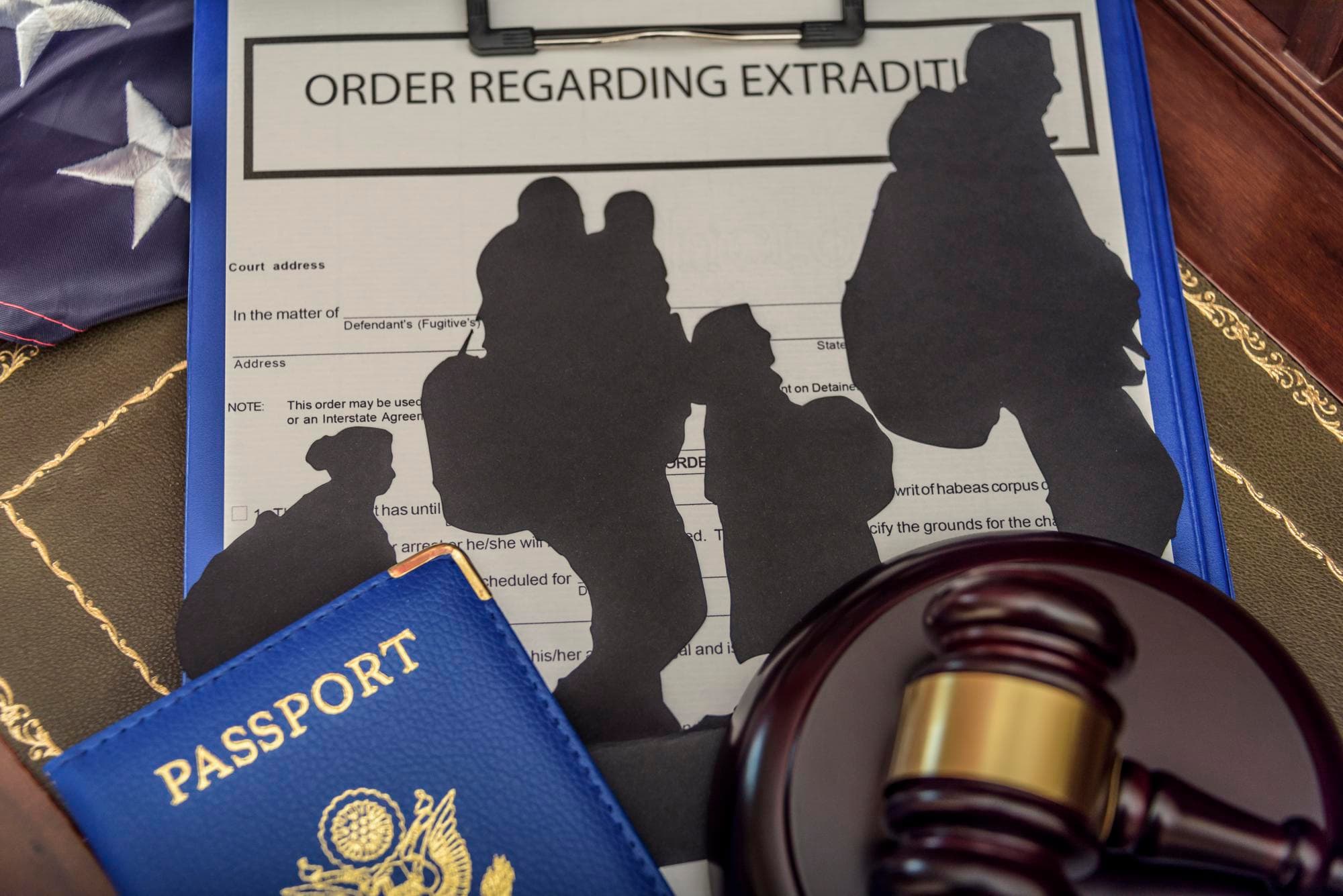
A U.S. immigration order is not the kind of policy move crypto traders usually put on their screens. It should be.
According to Decrypt, President Donald Trump’s new executive order directs federal regulators to tighten fraud screening and limit credit lines for undocumented immigrants. The immediate policy target is not crypto. It is access to financial services. But that is exactly why the order matters for the digital-asset market.
Crypto’s regulatory fights are often framed around ETFs, exchange rules, securities law, stablecoin bills, or agency turf. Those still matter. But the more practical question for many users is simpler: when a person, household, or small business has reduced access to traditional banking and credit, what rails remain available?
That is where stablecoins, Bitcoin ATMs, and cash-to-crypto infrastructure enter the conversation. Not as a clean substitute for banking. Not as a libertarian fantasy. As a messy fallback channel in a financial system where identity checks, credit rules, fraud controls, immigration enforcement, and payment access increasingly overlap.
For crypto businesses, the lesson is uncomfortable but important. Policy can create demand. It can also create compliance risk at the same time.
The Order Targets Finance, Not Crypto Directly
The Decrypt report says the executive order tasks federal regulators with tightening fraud screening and limiting credit lines for undocumented immigrants. That makes it a financial-access policy first.
The crypto relevance comes from the second-order effects. If access to conventional accounts, cards, credit lines, or remittance channels becomes harder for a group of people, demand may shift toward tools that are easier to access with cash, mobile wallets, or non-bank settlement.
That does not mean the order “boosts crypto” in any clean investment sense. The better read is that it may increase the importance of alternative payment rails in the parts of the economy where banking access is already fragile.
This is the distinction investors and operators should keep straight. A policy that pushes more people toward crypto rails is not automatically bullish for tokens. It can increase usage while also inviting more scrutiny from law enforcement, banking regulators, state licensing agencies, and consumer-protection officials.
Bitcoin ATMs are a good example. They are easy to understand, physically visible, and already associated with cash conversion. If more users look for non-bank channels, Bitcoin ATMs could see more attention. But the same visibility that makes them useful can make them an obvious regulatory target.
Stablecoins Sit in the Middle
Stablecoins are the more consequential part of this story because they are already being positioned as payment infrastructure rather than speculative assets.
Ripple’s stablecoin payments material in the supplied context makes the industry case plainly: stablecoins can offer faster settlement, lower costs, and continuous availability for cross-border payments. But Ripple also notes that stablecoins shift complexity into compliance, treasury, and operations.
That tradeoff is exactly what this kind of U.S. policy pressure exposes.
If a user is blocked from traditional credit or faces more friction moving money through banks, a dollar-denominated stablecoin may look practical. It can settle outside normal banking hours. It can move across borders. It can be held in a wallet rather than a bank account. For workers sending money home, small businesses paying contractors, or families dealing with limited account access, those features are not abstract.
But for the companies providing the rails, the hard part is not the blockchain transaction. It is everything around it.
Who is the customer? What disclosures are required? Which state money-transmission rules apply? How are sanctions and fraud checks handled? What happens when a user is legally present in one context but restricted in another financial context? How does a platform avoid becoming the weak point regulators point to when scams, evasion, or consumer losses appear?
Those are not theoretical concerns. They are the operating costs of turning stablecoins from a crypto balance into a payments product.
The Political Risk Is Bigger Than the User Story
There is also a political feedback loop here.
Decrypt’s context notes that experts compared the policy’s effect to earlier claims that regulators tried to choke off crypto firms under the Biden administration. Whether that comparison is fair or not, it points to the way crypto keeps getting pulled into broader fights over access to finance.
That is not always good for the industry.
Crypto companies have spent years arguing that they are legitimate financial infrastructure. If stablecoins and Bitcoin ATMs become more associated with people pushed out of regulated banking channels, crypto firms may face a sharper version of the same question: are they expanding access responsibly, or are they helping users route around rules?
The answer will not be decided by slogans. It will be decided by controls, licensing, transaction monitoring, disclosures, and the quality of the companies operating the rails.
For retail investors, this matters because “more usage” can be a weak signal if it arrives with higher policy risk. A Bitcoin ATM operator may benefit from demand but face tougher state-level scrutiny. A stablecoin issuer may see more payment volume but also greater pressure to prove reserves, compliance controls, and redemption reliability. A wallet or exchange may gain users but also inherit harder onboarding and fraud-prevention obligations.
The market often prices adoption first and asks about regulatory durability later. That is backwards for this kind of story.
Why Small Businesses Should Pay Attention
For small-business crypto readers, the practical angle is not whether to speculate on the policy. It is whether payment rails are becoming more fragmented.
A business that pays contractors, serves immigrant communities, sends money across borders, or accepts digital payments may see more customers and workers asking about non-bank options. Stablecoins can be useful in those settings, but only if the business understands the operational burden.
A stablecoin payment is not just a cheaper wire. It changes who handles custody, conversion, tax records, refunds, customer support, and compliance documentation. It can reduce settlement friction while adding administrative complexity.
Ripple’s checklist framing is useful here: stablecoins may simplify movement of value, but they do not eliminate the business process around money. In some cases, they make that process more explicit.
That means the winners are less likely to be companies that simply advertise “crypto payments” and more likely to be firms that make stablecoin use boring, documented, compliant, and reversible where needed. Boring is not a bad word in payments. Boring is what businesses can actually use.
Market Access Is Becoming the Real Policy Fight
The broader point is that crypto regulation is no longer only about what tokens are, or which agency gets jurisdiction. It is increasingly about who gets access to financial rails and under what conditions.
That makes the immigration order relevant even though it is not a crypto rule. It touches the boundary between identity, credit, fraud prevention, and payment access. Crypto sits near that boundary because it offers alternatives when bank access is limited, expensive, slow, or politically contested.
This is also why the industry should be careful about treating every access gap as an adoption opportunity. Some gaps reflect real customer pain. Others reflect legal restrictions. Some reflect bank risk models. Others reflect fraud controls. A crypto company that cannot tell the difference is not building financial infrastructure. It is accumulating regulatory risk.
Investors should apply the same filter. If a company’s growth depends on users being excluded from traditional finance, ask whether that growth is durable, compliant, and politically defensible. If the answer is unclear, the risk is not just reputational. It can become licensing risk, banking-partner risk, enforcement risk, and eventually revenue risk.
The Takeaway
The Trump immigration order is a reminder that crypto policy does not always arrive wearing a crypto label.
A move aimed at fraud screening and credit limits can still affect stablecoins, Bitcoin ATMs, wallets, and payment companies if it changes how people access money. That does not make the policy bullish or bearish by itself. It makes it structurally relevant.
The grounded read is this: crypto rails may become more important as traditional financial access gets more conditional. But the companies that benefit will be the ones that can handle the compliance load, not the ones pretending access and regulation are separate problems.
Educational only. Not financial, investment, tax, or legal advice. Do your own research. Read the full disclaimer.