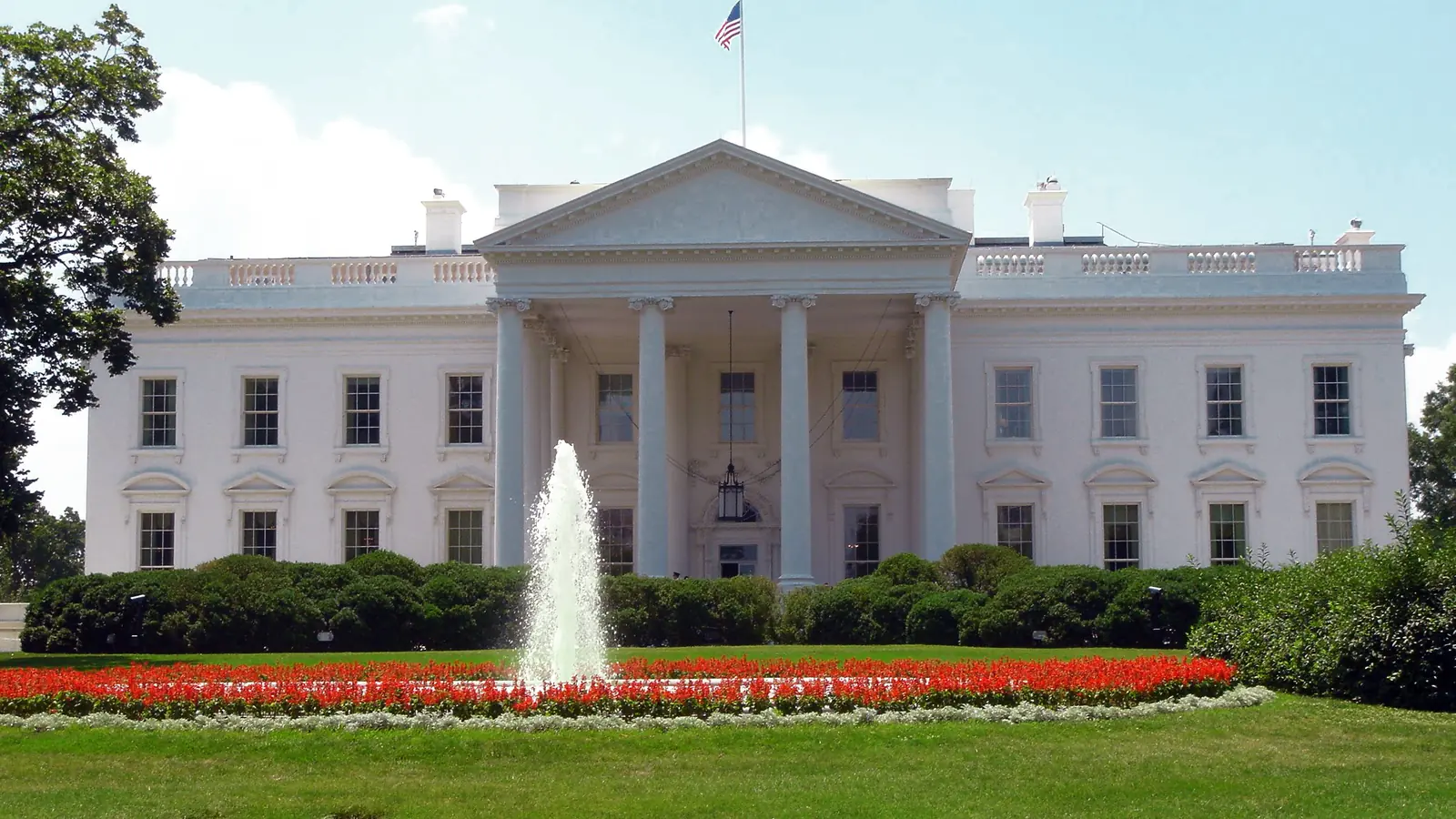
The White House reportedly no longer has a named crypto adviser following Patrick Witt’s departure. That does not erase existing policy, suspend enforcement, or automatically change the administration’s posture toward digital assets. It does create a more practical problem: nobody appears to have clear ownership of crypto coordination at the center of the executive branch.
That distinction matters. Crypto policy is spread across multiple agencies, congressional committees, state regulators, and law-enforcement bodies. Each institution approaches the market through a different mandate. Without a visible White House point person, those parts can continue moving—but not necessarily in the same direction or on the same timetable.
For crypto businesses, the risk is less dramatic than an overnight crackdown and more familiar than the industry might like: slower decisions, mixed signals, and uncertainty about where to take a policy dispute that crosses agency lines.
A White House adviser does not write the rules
CoinDesk reports that Witt’s exit leaves President Donald Trump’s White House without a named crypto adviser. The available reporting does not identify a replacement or establish how long the position could remain vacant.
It is important not to overstate the office itself. A White House crypto adviser does not independently pass legislation, issue binding agency regulations, or decide enforcement cases. Congress writes statutes. Regulators exercise authority granted by those statutes. Courts review legal disputes. State governments retain their own powers over areas such as money transmission and consumer protection.
A presidential adviser sits above that machinery without replacing it. The job’s value is coordination: helping the administration form priorities, communicating those priorities to agencies, and giving industry participants a recognizable channel for raising problems that do not fit neatly inside one regulator’s jurisdiction.
Crypto produces plenty of those problems.
A trading platform may face securities questions, commodities oversight, banking relationships, sanctions obligations, tax reporting, and state licensing requirements at the same time. A stablecoin business may have to think about reserves, redemption, payments rules, custody, anti-money-laundering controls, and the legal treatment of the token itself. Tokenization can touch securities law, transfer-agent functions, settlement, custody, and corporate governance before anyone has even argued about the blockchain.
No single adviser can resolve all of that. A capable coordinator can at least prevent one arm of government from discovering too late that another arm has taken a conflicting position.
The vacancy makes process harder to read
Markets often treat political appointments as ideological signals. A crypto-friendly person enters government, and prices rise. Somebody leaves, and traders look for evidence that policy has turned hostile.
That is too simple here.
A vacancy does not by itself show that the administration has changed its crypto agenda. Nor does it prove that pending work has stopped. Agencies can continue operating under existing leadership and legal authority, while congressional negotiations do not depend on a White House adviser holding a specific title.
The more credible concern is procedural. Who convenes the relevant agencies when their approaches conflict? Who decides which crypto issue deserves presidential attention? Who carries industry feedback into the White House—and, just as importantly, pushes back when the industry asks for something unrealistic?
When that ownership is unclear, policy can fragment. One agency may focus on investor protection, another on market structure, another on financial crime, and another on the safety of banks interacting with crypto firms. All may be doing their jobs correctly while producing a combined result that is difficult for businesses to implement.
That kind of uncertainty rarely generates a single cinematic headline. It shows up in delayed product launches, longer legal reviews, more conservative banking decisions, and compliance budgets built around several possible outcomes.
Businesses should separate access from authority
The crypto industry has spent years treating political access as a proxy for regulatory progress. A meeting at the White House can be useful, but it is not a rulebook. A favorable speech can clarify intent, but it does not necessarily bind an independent regulator or survive a court challenge.
Witt’s departure reinforces the need to separate three things that are often bundled together: political support, administrative coordination, and enforceable law.
Political support can influence priorities and appointments. Coordination can reduce contradictions and speed decisions. Durable legal certainty usually requires legislation, completed rulemaking, judicial interpretation, or some combination of the three.
For an exchange, issuer, custodian, or payments company, only the last category provides a strong foundation for long-term product design. The first two still matter, especially when the law is unsettled, but neither should be mistaken for permission.
That is also useful for investors evaluating policy headlines. A vacant advisory post may increase execution risk without changing the legal status of any token or business model. Conversely, naming a new adviser would not instantly settle jurisdictional disputes. Personnel can improve the route to a decision. They are not the decision.
The replacement will matter more than the vacancy headline
The next meaningful development is not simply whether the White House fills the role. It is how the administration defines it.
A successor with a narrow industry-liaison function would be different from an adviser empowered to coordinate agencies and shape legislative strategy. Reporting lines matter, as does access to senior officials. So does the person’s ability to work across securities, commodities, banking, payments, sanctions, and tax policy rather than treating crypto as one self-contained category.
Businesses should therefore watch for specifics rather than celebrating a title. Is a replacement named? What responsibilities are attached to the position? Does the adviser have a visible role in interagency work? Do subsequent agency actions become more consistent, or does the government continue issuing signals that are difficult to reconcile?
The absence of a named adviser can also affect congressional negotiations indirectly. The White House often has to decide which compromises it will support, oppose, or seek to modify. If responsibility for crypto is dispersed internally, lawmakers and industry groups may receive less decisive feedback. That does not make legislation impossible, but it can make the path less predictable.
Again, the concern is not that all policy work suddenly stops. Government rarely works that neatly. The concern is that crypto issues become one item among many competing for attention, without an official whose job is to keep them moving.
What crypto firms can do now
Businesses should not rewrite compliance plans around one personnel departure. They should identify which assumptions in those plans depend on political guidance rather than enacted law or final agency action.
That means documenting the regulator responsible for each part of a product, the legal basis supporting the company’s position, and what would need to change if another agency asserted jurisdiction. Firms relying on an anticipated federal framework should preserve a workable path under current rules rather than assuming coordinated relief will arrive on schedule.
Smaller companies face the sharpest version of this problem because they have less money for parallel legal strategies. For them, clarity about unresolved questions is valuable in its own right. A launch delayed because of a known regulatory dependency is frustrating. A launch built on the belief that friendly political language equals legal certainty can be much more expensive.
Investors can apply the same discipline. Policy vacancies are relevant to companies whose valuations depend heavily on faster approvals, broader market access, or new federal legislation. They are less useful as immediate trading signals for the broader crypto market.
The grounded takeaway
The White House crypto vacancy is not evidence of a policy reversal. It is evidence of an unfinished governance structure.
Crypto now intersects with enough of the financial system that coordination is not ceremonial. It determines whether agencies produce a workable combined framework or leave businesses reconciling multiple interpretations on their own.
The next appointment may reveal how seriously the administration intends to manage that problem. Until then, companies and investors should judge progress by binding rules, legislation, and consistent agency action—not by access, titles, or the assumption that an empty chair will quickly fill itself.
Educational only. Not financial, investment, tax, or legal advice. Do your own research. Read the full disclaimer.